Visiting Card Finishes Explained: Matte, Spot UV, Foil and More
Matte, glossy, spot UV, raised foil, velvet touch and pearl: how each card finish looks and feels, when to use it, and how to prepare spot UV and foil masks.
Himalaya Offset · 10 October 2026 · 4 min read
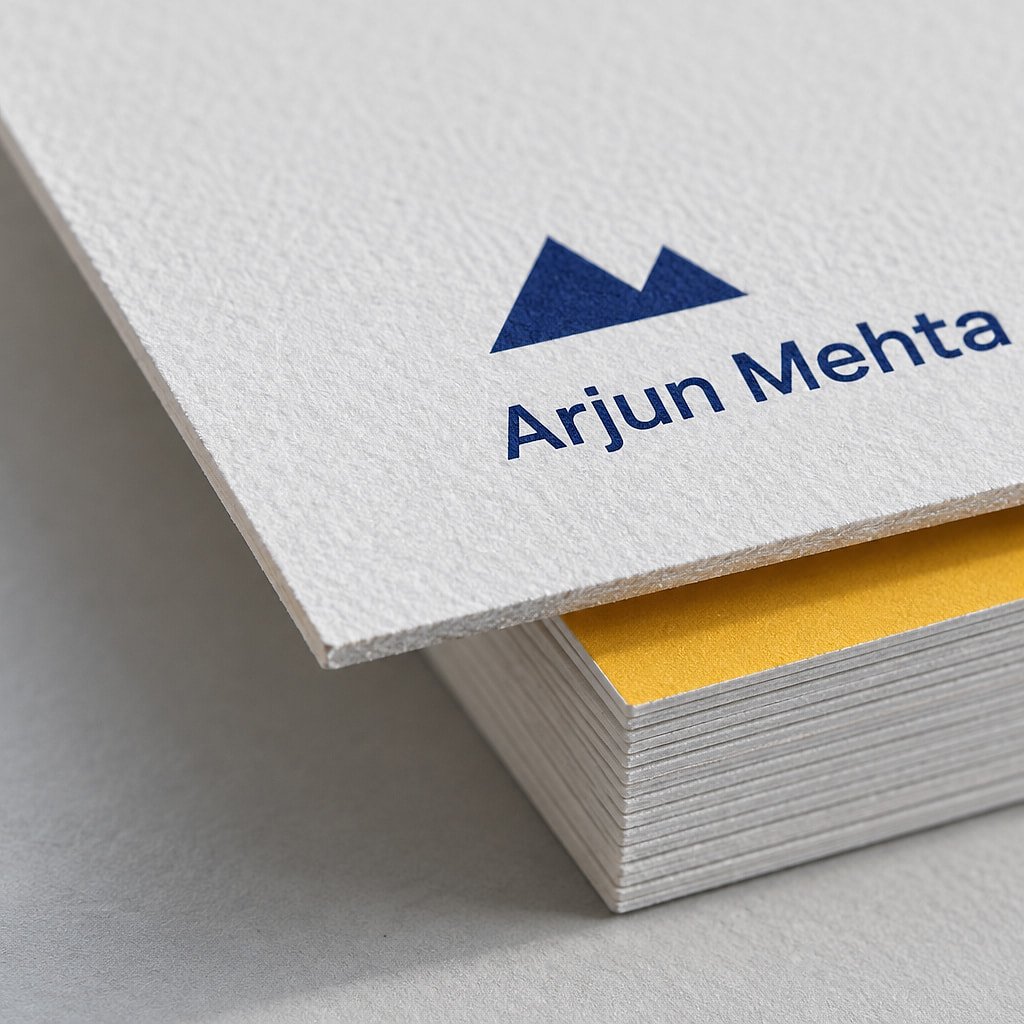
Two cards with the same design can feel completely different in the hand because of the finish. Here is a plain guide to six of them: everyday matte and glossy, spot UV, raised foil, velvet touch and pearl, plus file set-up for the special ones.
Matte and glossy lamination
A typical visiting card is printed on coated card of 300 GSM or more and often laminated: a thin film is bonded on with heat to protect the print. The film decides the look.
- Matte has no shine. Text reads easily under shop lights, colours look slightly softer and the card feels calm. Dark matte backgrounds can show scuffs after weeks in a wallet. Matte visiting cards suit doctors, lawyers, consultants and any text-led design.
- Glossy reflects light, so photos and bright colours look richer. It also shows glare and fingerprints. Glossy cards suit shops, restaurants, real estate and any card built around a photo.
Neither film takes ballpoint ink well. If you write appointment times on your cards, choose standard cards without lamination.
Spot UV visiting cards: shine where you want it
Spot UV is a clear, glossy coating applied only to the parts you choose, usually a logo, a name or a pattern, and hardened under ultraviolet light. Put that gloss on a matte laminated card and the contrast does the work. Tilt it and only the coated areas catch the light.
Spot UV adds shine, not colour: the print underneath just looks glossier and a touch deeper. It works best on bold shapes and medium to large text; thin lines and fine type show it less. Spot UV is a good middle path: noticeably special, but still quiet.
Raised foil: metal you can feel
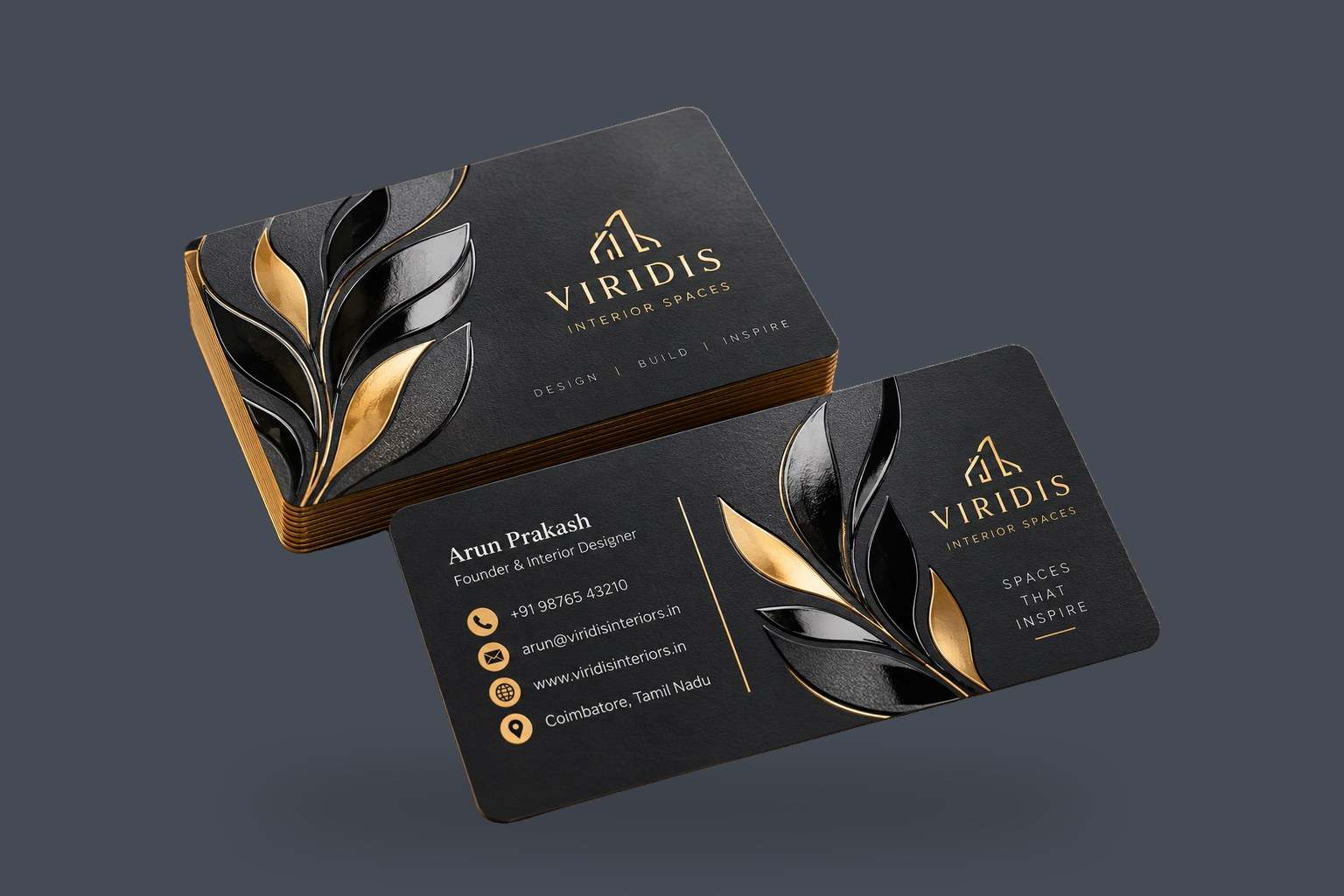
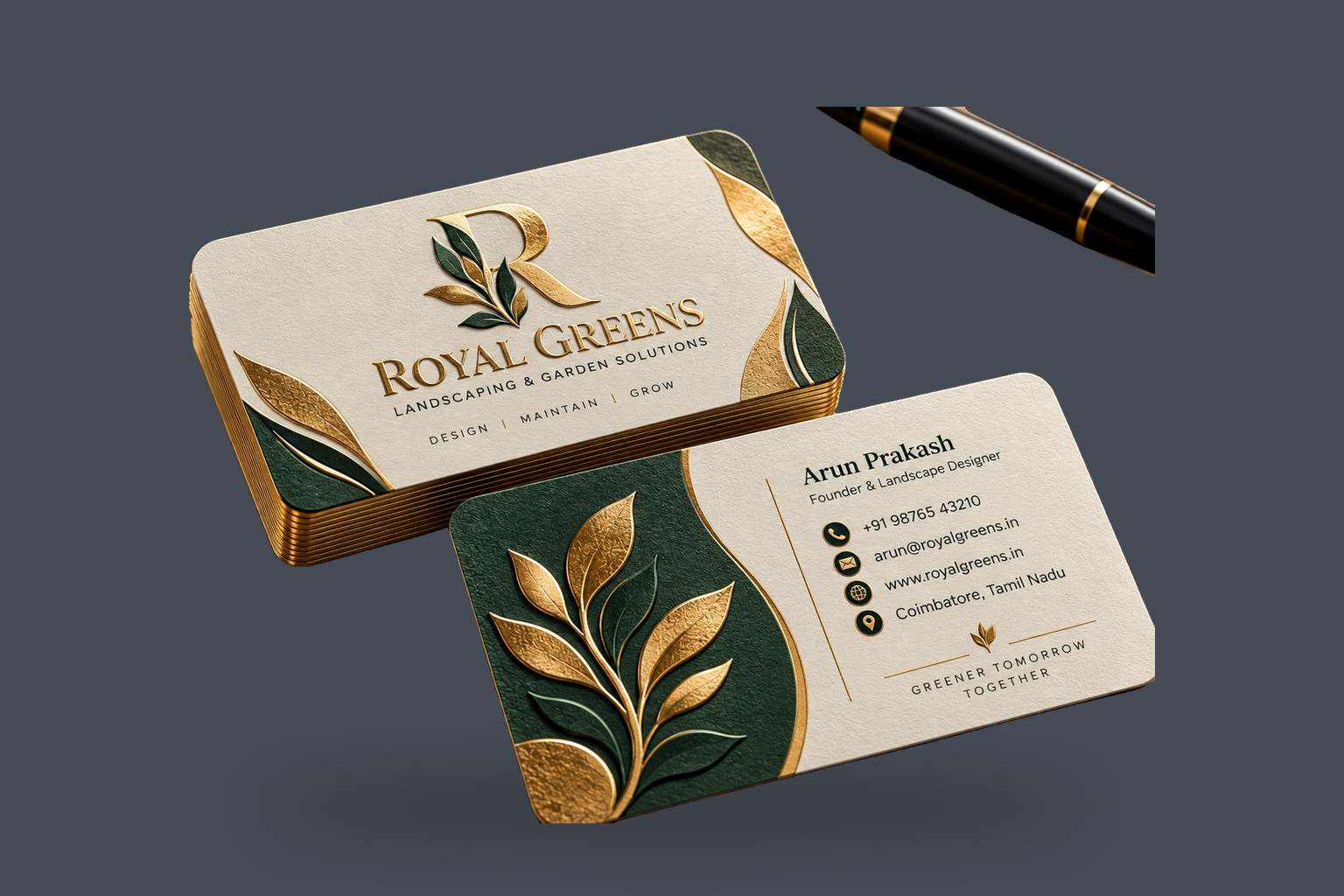
Foil is a thin metallic film, gold being the familiar one, transferred onto chosen areas. Raised foil adds height as well, so the foil stands slightly above the surface and you can feel your name with a fingertip.
It is the boldest of the six, and raised foil visiting cards suit jewellers, boutiques, architects and anyone whose brand leans premium. Keep foil to one or two elements; a card covered in it looks busy. Ask us which foil colours are available.
Velvet touch and pearl
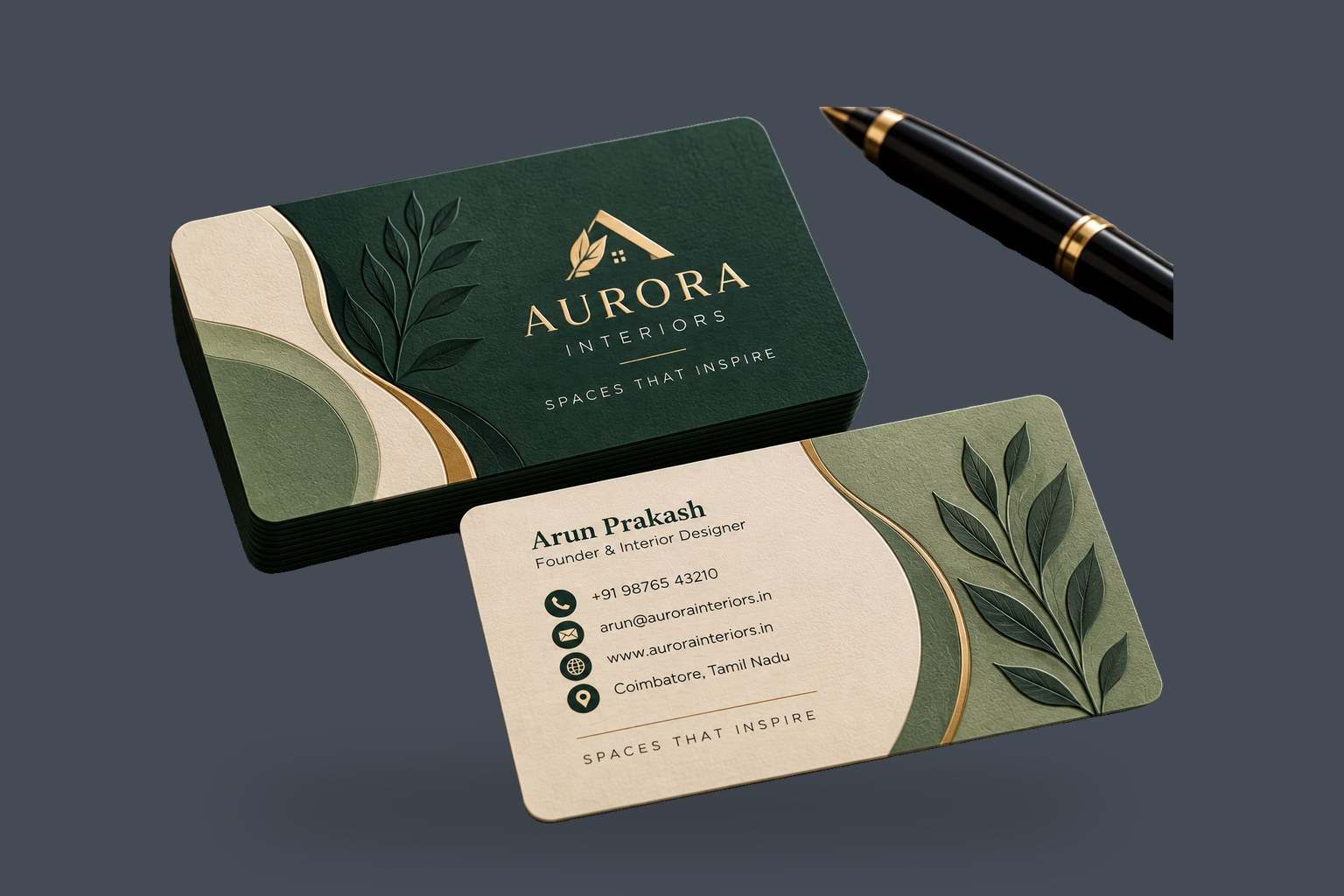
- Velvet touch, also called soft touch, is a lamination with a smooth, almost suede-like feel and no shine. Spot UV and gold foil, both add-ons on our velvet touch cards, stand out sharply against it. Like matte, it can mark if handled roughly.
- Pearl has the shimmer built into the paper, so the whole card glows softly as it moves. CMYK printing has no white ink, so white areas show the paper's own tone. Plan your colours around the pearl tone you pick: white, ivory or gold. It suits salons, event planners and wedding businesses.
Which finish, when
- Text-heavy and professional: matte
- Photo-led or colourful: glossy
- One detail you want noticed: spot UV over matte
- Premium, metallic and tactile: raised foil
- Soft and memorable in the hand: velvet touch, perhaps with spot UV
- Sheen without foil: pearl
Preparing spot UV and foil masks
The press needs a mask showing where coating or foil goes: a separate file, the same size as your design, with those areas in black.
- Same size, bleed included. For a standard 88.9 × 50.8 mm card with 2 mm bleed, both the artwork and the mask are 92.9 × 54.8 mm.
- Solid black only. Use 100% black (K 100) for areas to coat or foil and leave the rest white. No greys, tints, gradients or shadows.
- Same position. Copy elements across from the artwork rather than redrawing them.
- Vector where possible, with text converted to outlines.
- No hairlines. As a rough guide, keep lines above 0.3 mm and text above 8 pt, and go bolder for raised foil.
- Allow a little movement. Keep coated and foiled details 3.5 mm inside the trim, and do not rely on foil sitting exactly inside a thin printed outline.
- Clear names, one mask per side, such as front.pdf and front-spotuv.pdf.
In Canva, duplicate the page, delete everything except the elements to be coated, turn them black on white and download that page as its own PDF with print bleed on.
If this feels fiddly, upload your normal design and ask our team to set up the mask, or call or WhatsApp +91 88384 35916. We send a free digital proof first, and nothing prints until you approve it.
If one detail on your card deserves to shine, the spot UV visiting cards page is a good place to start.
Questions about your job?Talk to our team in Vellore on WhatsApp or call, Monday to Saturday.
Contact usPrint it with us